

Of Dogs, Horses and Country
The animals that helped shape Australia, and the songs that keep their stories alive.
From the wool that helped build an economy to the dogs protecting our borders, animals have shaped Australia’s history — and remain part of its everyday life.
There is something unmistakably Australian about a working dog watching a mob of sheep. The stillness before the movement. The whistle from somewhere across the paddock. The sudden burst of energy as a dog sets off, seemingly knowing where it needs to be before anyone has finished giving the command.
It is a familiar picture, but behind it sits a much bigger story. Dogs, horses, sheep, cattle and camels have all helped shape how Australians work, travel and live. Their contribution runs through our farming communities, the development of our towns and the ways we protect the country today.
The farm dog might be the most recognisable face of that relationship. It certainly isn’t the beginning.
Long before European colonisation, dingoes lived alongside First Nations communities, with relationships that could extend well beyond practical companionship. Research published in 2026, undertaken with Barkindji custodians, examined a dingo deliberately buried almost 1,000 years ago beside the Baaka, or Darling River. The care taken with the burial, and evidence that river mussel shells continued to be added to the site over centuries, reveal a connection with deep cultural significance.
That history deserves its own place in the story. Australia’s relationships with animals did not arrive with the first fences or sheep stations, and they cannot all be understood through the idea of an animal having a job.
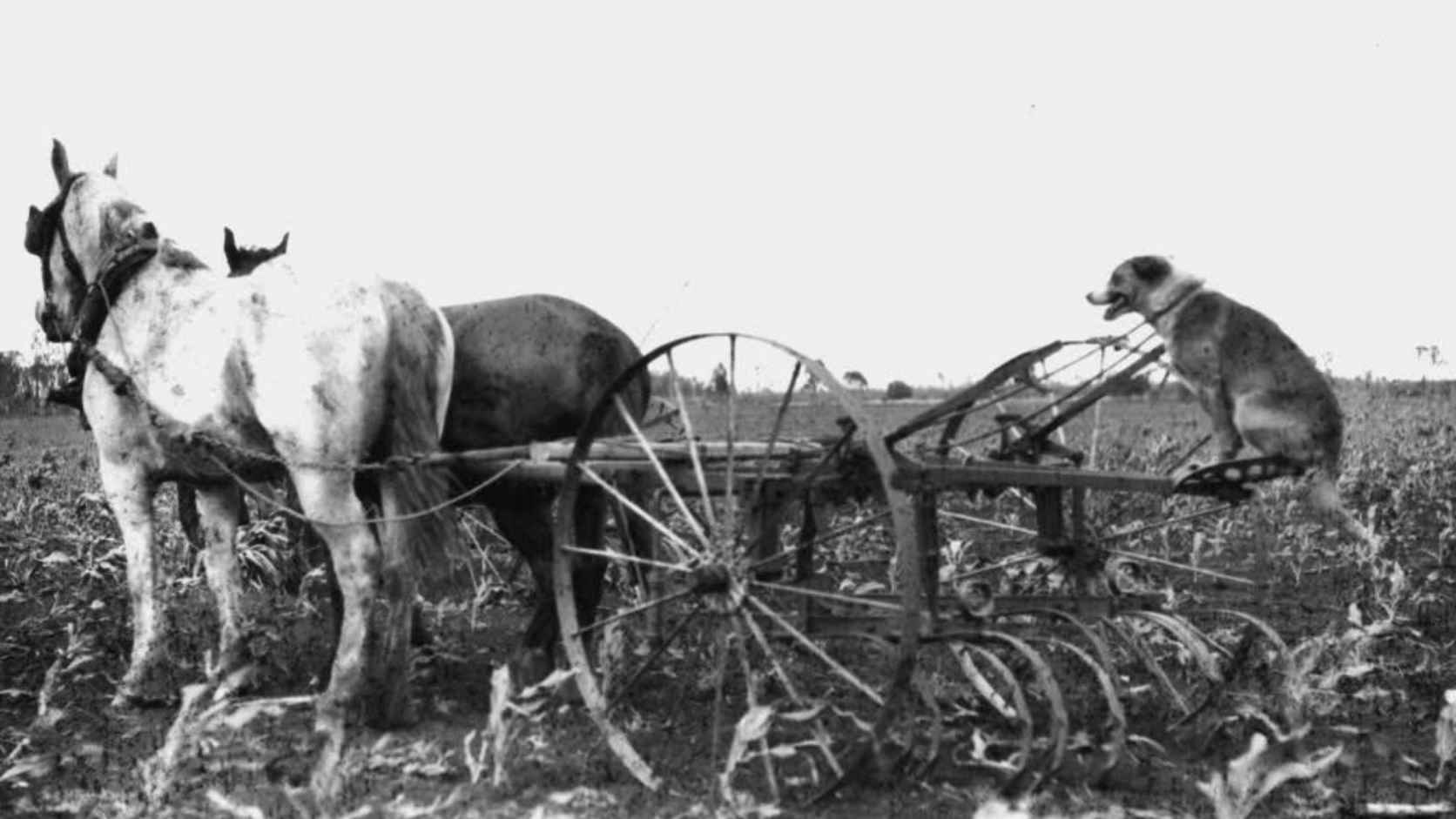
With British colonisation came introduced livestock and new demands for animal labour. Horses arrived with the First Fleet in 1788. As pastoral settlement expanded, they became essential to mustering and moving stock, while draught horses provided power for farm machinery. Bullock teams hauled wool and timber, helping move heavy loads through difficult country.
These animals also influenced where people gathered. The National Museum of Australia records that many towns developed around places where drovers and teamsters watered their animals, or where coaches stopped along their routes. Saddlers, blacksmiths, feed merchants and transport businesses grew around that traffic. Hooves helped determine the rhythm of a town long before engines did.
Horses helped keep those communities connected, too. From 1854, Cobb & Co coaches carried passengers, parcels, money and gold, while their mail services delivered letters, medicines, tools and household goods to the bush. Teams of horses made that network possible. A coach arriving in town brought news and supplies as well as people, linking isolated settlements with a world that could otherwise feel a very long way away.
Their place in Australian history also extends overseas. During the First World War, Australian Light Horse soldiers relied on Walers, hardy horses named for their early export association with New South Wales. The partnership between rider and horse became part of the nation’s wartime memory. These animals carried the physical burden of military service, adding another, often painful, chapter to their working lives.
Australian songwriters have also remembered the horse as a companion. Slim Dusty’s recording of ‘The Pearl of Them All’, drawn from Will H. Ogilvie’s poem, tells of an ageing station horse and the painful farewell that follows a lifetime of shared work. Read alongside the history, it gives that partnership an individual face: one horse, remembered and mourned.
Sheep helped shape Australia on an equally enormous scale. The first sheep arrived with the First Fleet in 1788, initially as a source of meat. The arrival of merinos in 1797 helped lay the foundations for an industry that would transform the colonial economy. By the late nineteenth century, wool had become Australia’s major export. The familiar expression that Australia ‘rode on the sheep’s back’ reflects just how heavily the country’s prosperity depended on the fleece.
That influence reached well beyond the people who owned the flocks. Sheep needed shepherding, mustering and shearing; wool needed sorting, carting and selling. The industry linked station workers and shearing sheds with transport businesses, merchants and overseas buyers. Its working culture also helped shape Australian politics. The shearers’ strike of 1891 was among the major industrial disputes that encouraged the labour movement to pursue parliamentary representation.
That working world found its way into music through ‘Click Go the Shears’. The traditional Australian bush song places sheep and shearers at the centre of the story, carrying the activity of a nineteenth-century shearing shed into the national songbook. It is a reminder that the wool industry shaped what Australians sang about as well as how they earned a living.
Cattle brought their own patterns of work and movement. Before road transport became dominant, drovers walked mobs over long distances, with horses, dogs and people working together to keep stock moving between feed and water. In Queensland, stock routes developed along river systems and existing Indigenous trade routes and trails. The landscape already held generations of knowledge about movement and water before these corridors became part of the pastoral economy.
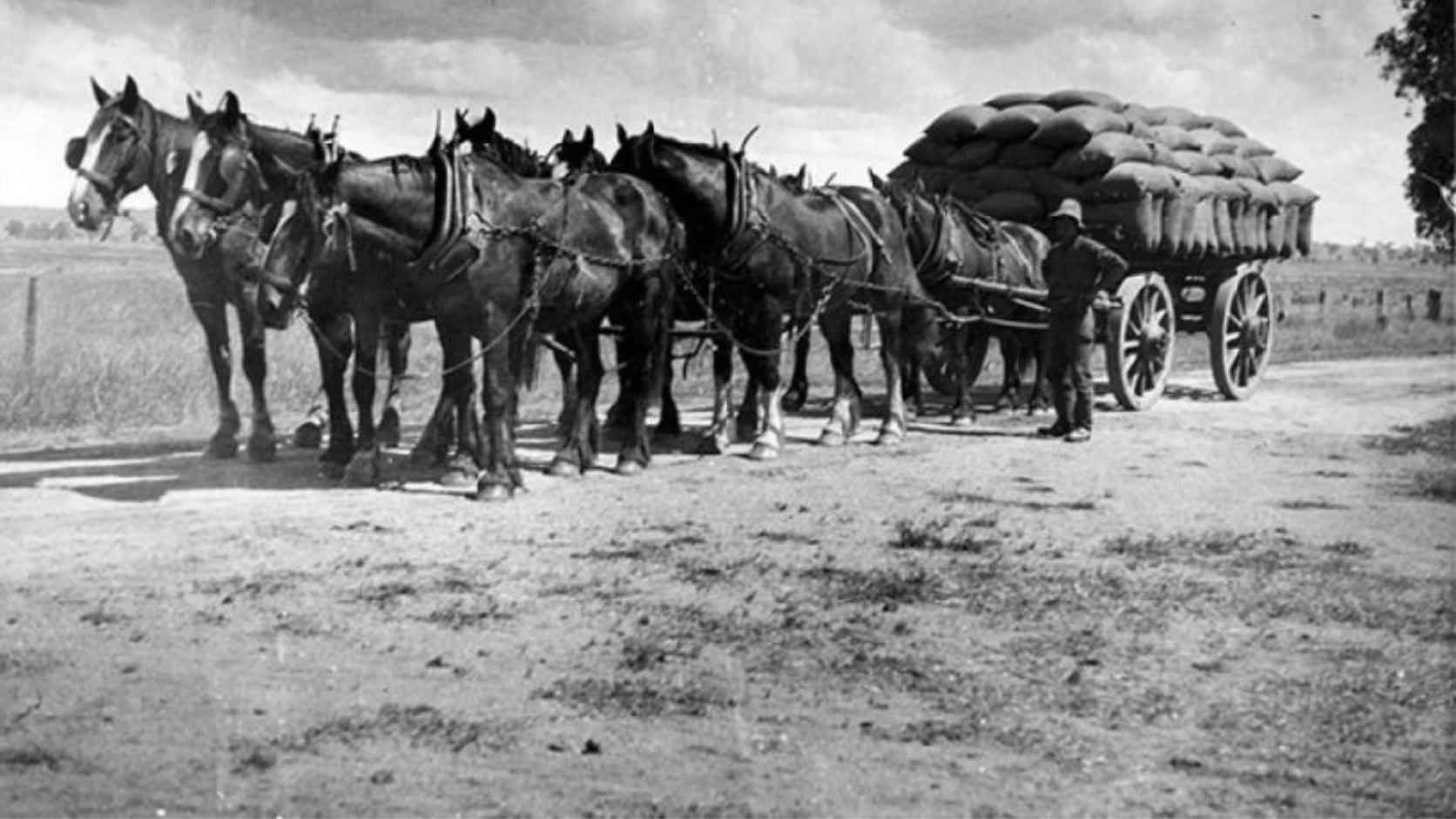
The scale of that work could be extraordinary. On Western Australia’s Canning Stock Route, the National Museum of Australia records that a round trip from old Halls Creek station to Wiluna could take about seven months. Droving teams travelled with workhorses, packhorses, night horses and camels. Getting cattle to their destination depended on caring for an entire travelling company of animals, with water governing each stage of the journey.
John Williamson’s ‘Three Sons’ brings cattle country into a more intimate frame. Its narrator reflects on generations of raising Herefords, the uncertainty of drought and prices, and the pride of having his sons return to work alongside him. Cattle provide the livelihood around which the family story turns, connecting the stock camp with questions of home, inheritance and belonging.
These industries also changed Country. The spread of sheep and cattle stations involved the occupation of First Nations lands and placed pressure on existing food sources, water and ways of life. Their contribution to national wealth sits alongside the dispossession and environmental change that accompanied pastoral expansion.
The connection with today remains practical. Queensland’s stock routes still provide corridors for moving livestock and pasture for emergency grazing, including during drought. Cattle and sheep also remain major sources of food, fibre and export income. In its September 2026 outlook, ABARES forecast the combined gross value of cattle slaughter and live cattle exports at $22.4 billion for 2026–27, and sheep slaughter, wool and live sheep exports at $10.3 billion. These are forecasts, but they show how substantial the industries remain.
Across the arid inland, camels also carried loads where horses struggled and other transport was limited. From the 1860s, cameleers from Afghanistan and parts of South Asia brought expertise that became vital to inland transport. Often collectively called Afghan cameleers, they came from several different regions. Remembering the camels means remembering the skilled people who worked with them.
The same applies to Australia’s pastoral history. Aboriginal stockmen and women brought substantial skill and knowledge to station work, often within an industry that exploited their labour. The 1966 Wave Hill Walk-Off, led by Vincent Lingiari and involving Gurindji workers and their families, challenged exploitative conditions and became a landmark struggle for the return of their land. The familiar image of a rider on horseback carries a more complicated history than bush mythology sometimes allows.
Working dogs developed within this changing pastoral landscape. The kelpie’s foundations lie in imported working collies, with generations of breeding selecting dogs suited to Australian conditions. The Working Kelpie Council traces the breed’s name to a female called Kelpie and her descendants, whose ability helped establish their reputation.
Behind the breed’s fame is a practical partnership: a handler learning a dog’s strengths, and a dog learning the work. Moving livestock takes more than speed. It requires judgement about pressure, space and when to hold back. Research into Australian herding dogs has found that the traits handlers value vary with the work their dogs are asked to do.
Their contribution has a measurable economic value, too. A study published in 2014, drawing on information from 812 Australian herding-dog owners, estimated the median value of a dog’s work over its working life at $40,000, against median ownership costs of $7,763. Those are historical research estimates rather than today’s prices, but they demonstrate why a capable dog can be such an important part of a farm business.
The affection behind that partnership is familiar territory for Australian country music. Written by Norma O’Hara Murphy and recorded by Slim Dusty, ‘Just an Old Cattle Dog’ recognises the enduring desire of an ageing working dog to be involved. It brings the story back from economic value to the animal a handler knows, works beside and grows attached to.
Today, the working dog’s place in Australia stretches well beyond the yards.
At airports, seaports and mail centres, biosecurity detector dogs search for material such as meat, fruit, seeds and plants that could carry pests or diseases. Their work helps protect the farms and environments that Australians depend on. The link between a dog in an arrivals hall and a sheep property hundreds of kilometres away is closer than it first appears.
In the bush, conservation dogs are helping researchers locate wildlife and gather evidence about its presence and health. The University of the Sunshine Coast’s Detection Dogs for Conservation team uses dogs to help find animals including koalas, as well as threatened plants and pest species. Its work also brings dogs together with technology such as thermal drones. The animal partnership is finding new uses as the tools around it change.
That continuing contribution asks something of us in return. Celebrating a working animal should mean valuing its care: thoughtful training, appropriate workloads, rest, veterinary attention and a secure life when the work is finished. Admiration for endurance should never become an excuse to overlook an animal’s needs.
Together, these songs offer another way into the history: through the affection, pride and grief that sit beside the daily work. They share the paddocks, roads and communities that give country storytelling its sense of place. A working dog is both part of someone’s livelihood and, often, a deeply familiar presence in their day.
Australia’s animals have powered farms, carried loads and supplied the food and fibre that support livelihoods across the country. Working dogs also help protect what comes through our borders and reveal what survives in our bush.
The whistle across the paddock still matters. So does the dog listening for it.
Listen Now
Denim Sounds Good
Listen to the latest tracks, new releases and old favourites.