
Interview - Ian Moss: The Songs, the Stories and the Roads That Brought Him Here
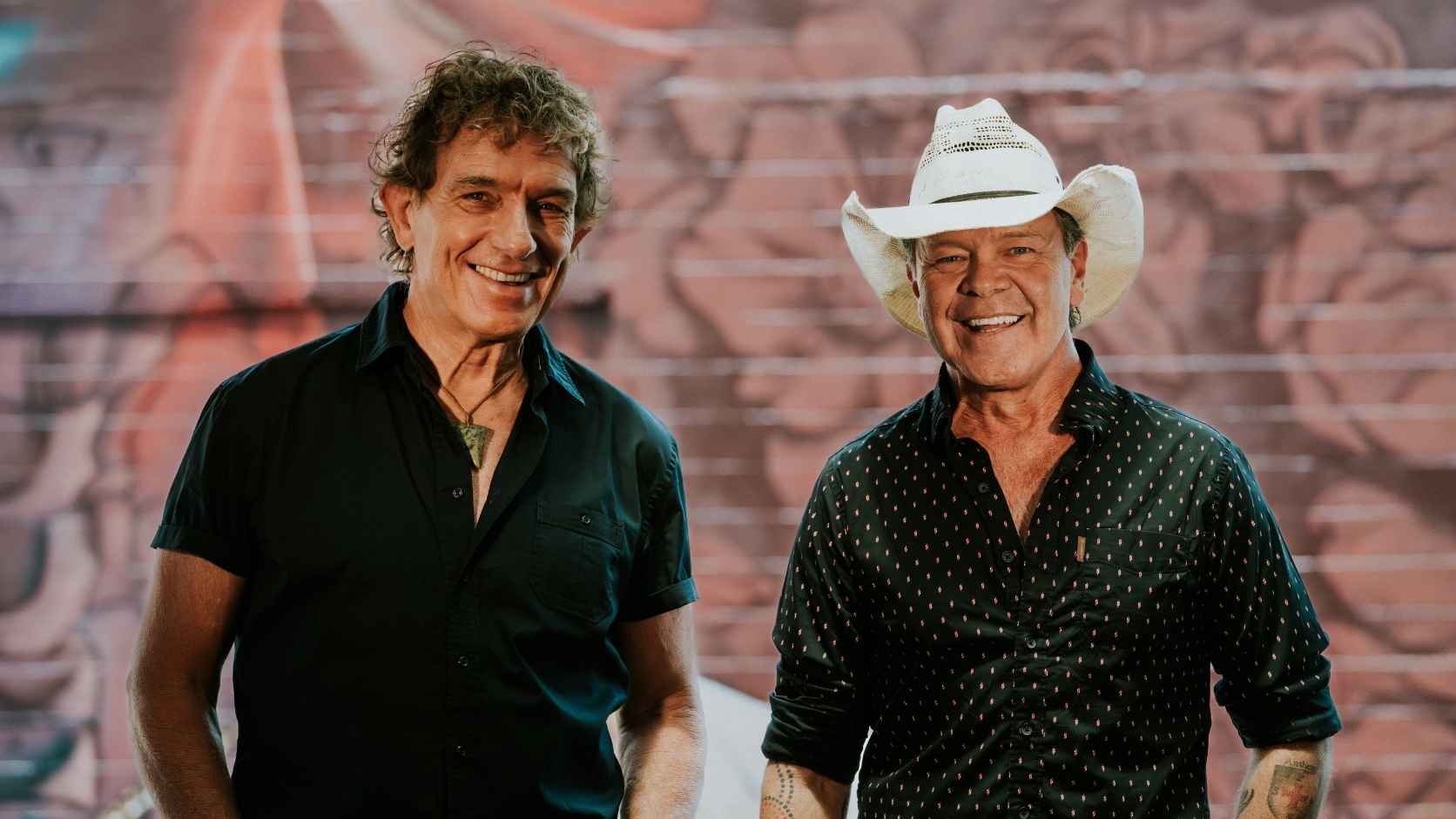
Ian Moss that has never really changed. For all the years on the road, the records, the success of Cold Chisel and a solo career that has established him as one of Australia's most respected guitarists and singers, there's still a sense of the kid from Alice Springs who fell in love with music and somehow found himself making a living out of it.
Catching up with Mossy for Denim Is Good, the conversation moves easily from growing up in Central Australia to the music that shaped him, the Australian pub circuit, his love of the open road and the unlikely musical partnership that has brought him together with Troy Cassar-Daley.
On paper, Moss and Cassar-Daley might appear to come from different musical worlds. One is closely associated with Australian rock and blues, the other with country music. Yet put them together on stage and the connection feels entirely natural.
For Moss, the explanation has less to do with musical genres than with the lives they've lived and the things they value.‘I think there's a bit of humble country folkness’, he says, reflecting on what they have in common.
Cassar-Daley was born in Sydney but grew up in Grafton, while Moss was born and raised in Alice Springs. Both came from places that felt a long way from the centre of the Australian music business, and both grew up wondering how they might bridge that distance and turn their love of music into something more.
That sense of having come a long way hasn't disappeared. Moss reckons they still share a certain amazement at where their careers have taken them, along with a genuine appreciation for the opportunities they've had.
There's another connection too, and it's probably the most important one. They both love a good song.
Moss talks about the importance of lyrics, the stories behind the songs and the pleasure of sharing those stories with an audience.
Cassar-Daley is a natural storyteller, and Moss admits that once he has a good song to talk about, he's quite happy to get involved himself. Together, they have found a relaxed way of performing that allows the music and conversation to sit comfortably alongside each other.
It's also a partnership that makes more sense when you look back at Mossy's musical beginnings.
Growing up in Alice Springs, he wasn't surrounded by an endless choice of radio stations. There was essentially one, the ABC, broadcasting a mixture of music that introduced him to country, folk, blues and soul long before he began thinking about the differences between them.
He remembers a regular program called the Hospital Hour, or Hospital Half Hour, where people from across the region would write in requesting songs. It was the sort of radio that connected distant communities, and the music reflected the tastes of the people listening.
Hank Williams was part of that soundtrack, along with Australian country favourites such as ‘The Little Boy Lost’ and ‘The Warrumbungle Mare’. But mixed in with those songs were recordings by Sam Cooke and Ray Charles, opening the door to another musical world.
‘Sam Cooke, massive influence there’, Moss says.
Cooke's voice, with its remarkable range and effortless soul, made a lasting impression. Ray Charles was another important figure, although Moss admits it took him a little longer to fully appreciate the character of Charles's singing.
There were other discoveries along the way. Johnny Horton's ‘The Battle of New Orleans’ caught his attention, as did the music of songwriter John D. Loudermilk, particularly ‘Tobacco Road’, a song that moved easily from its folk and blues origins into the heavier world of blues-rock.
Looking back, Moss can hear how those early country influences found their way into his guitar playing, sometimes without him even realising it. Although soul and rock eventually became the sounds most closely associated with his career, country music was there from the beginning, quietly becoming part of his musical vocabulary.
It's one of the reasons his collaboration with Cassar-Daley feels so comfortable. The two might have taken different roads, but their musical foundations aren't nearly as far apart as people might imagine.
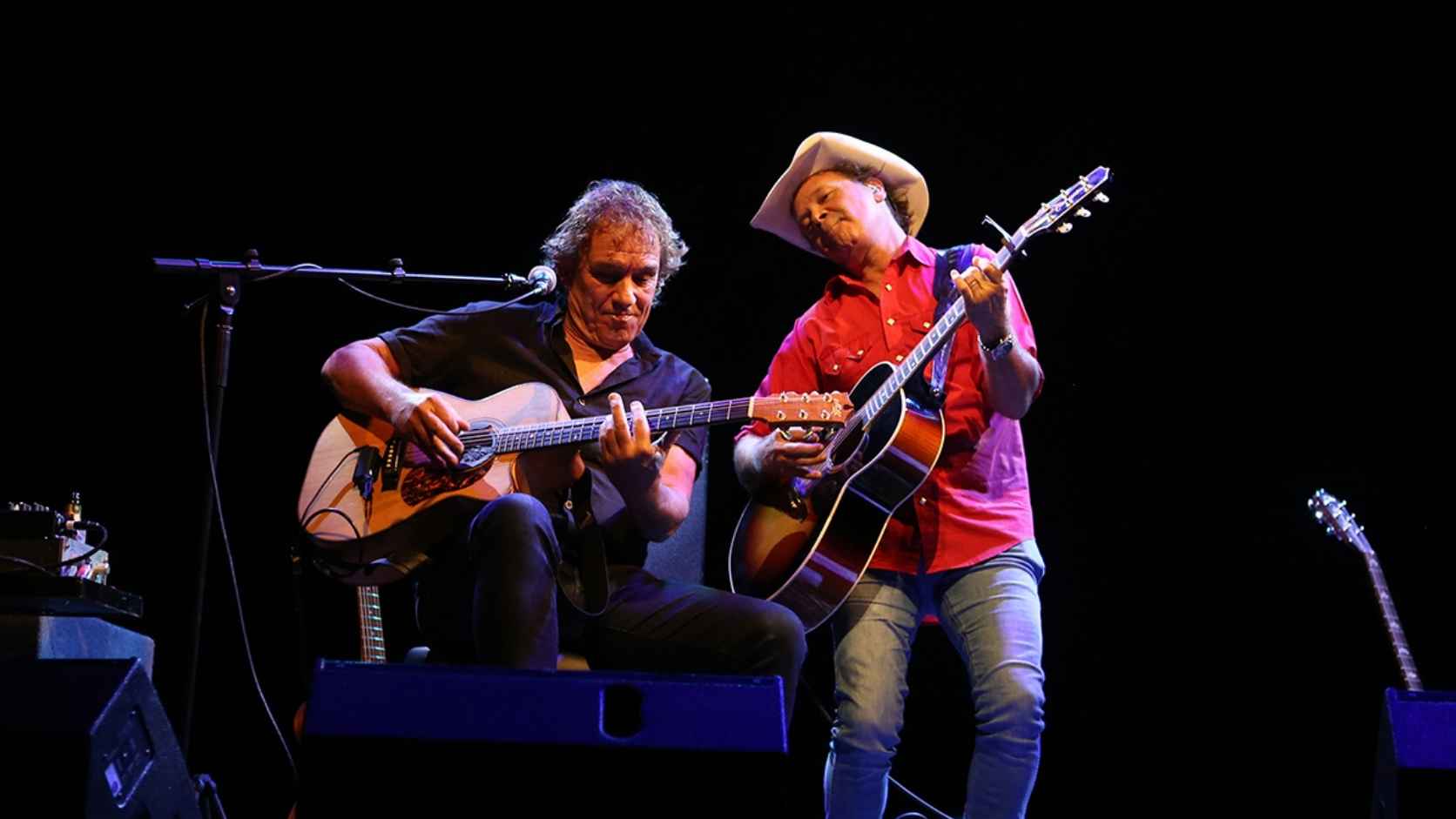
Their approaches to the guitar, however, provide a few entertaining differences. Cassar-Daley is particularly fond of using a capo to find different chord voicings and arrangements. Moss, on the other hand, has spent much of his career tuning his guitars down, something that began during his Cold Chisel years and has remained part of his sound ever since.
He recalls experimenting with lower tuning around the time of the Circus Animals recordings, discovering that dropping the guitar by a semitone made certain songs easier to play while producing a sound he particularly liked.
It also reminded him of Jimi Hendrix.
There was something about the way the guitar responded, particularly in its harmonics, that brought Hendrix's sound to mind. When Moss investigated further, he discovered that Hendrix had also regularly tuned down a semitone. That was enough to convince him there was something worth pursuing.
The lower tuning also had a practical advantage when it came to singing. Moss laughs about the extraordinary vocal range of Jimmy Barnes, acknowledging that not everyone has the same ability to reach those high notes. Dropping the tuning gave him a little more room to work with.
From Matchbook onwards, his solo material was generally performed a semitone below standard tuning, and in more recent years he's sometimes gone down a full tone.
That creates an amusing situation during the shows with Cassar-Daley. While Troy can simply move his capo and get on with the next song, Moss is often swapping guitars and checking tunings as they move back and forth through their respective catalogues.
He seems quite happy with the arrangement, even enjoying the distraction.
For all the technical differences, both musicians understand that the real purpose of playing is to serve the song, something that becomes even clearer when Moss starts talking about the records he still returns to.
One of his favourites is Jeff Beck's Emotion & Commotion, an album that brings Beck's extraordinary guitar playing together with orchestral arrangements and a range of vocal performances.
Moss speaks about the record with genuine admiration, describing Beck's playing as something that seemed to capture everything he had done throughout his career while still pointing towards new musical possibilities.
It's the sort of record that reminds you how expressive an electric guitar can be in the right hands, particularly when the player is more interested in emotion and phrasing than simply demonstrating technique.
Another recording that has stayed with him comes from a very different musical world. Frank Sinatra's Sinatra at the Sands, recorded with Count Basie's orchestra, made a particular impression on Moss through its performance of ‘Angel Eyes’, a song he has also included in his own solo shows.
What struck him wasn't simply Sinatra's voice or the quality of the arrangement, but the way the performance gradually changes mood.
Moss describes how Sinatra begins almost casually, with a slightly flippant attitude towards the song, before drawing the listener into something much darker and more emotional. By the end, the atmosphere has completely changed.
‘The power of music, how it can transport you’, he says.
It's an observation that tells you plenty about how Moss listens to music. Whether it's a blues guitarist, a soul singer or Sinatra standing in front of a big band, what matters is the ability to communicate something genuine.
That same thinking shapes his attitude towards musical genres.
Country, rock, blues and soul have always borrowed from one another, and Moss wonders whether today's listeners are becoming less concerned about labels simply because they have access to so much different music.
Once upon a time, what you heard was largely determined by the radio stations available to you and the records you could find. Now almost everything is only a few clicks away.
Perhaps, he suggests, that makes people more willing to judge a song on its own merits rather than worrying about whether it belongs in a particular category.
It's a refreshing way of looking at things, especially at a time when music is so often divided into increasingly narrow genres and playlists. For Moss, the important question remains whether a song connects with you, not whether it has a fiddle, a pedal steel or a loud electric guitar.
Of course, the way musicians learn to play those songs has changed enormously too. For Moss and Cold Chisel, the Australian pub circuit was effectively a musical apprenticeship. Arriving in Sydney as the live music scene was expanding, the band found itself playing in front of audiences night after night, developing the confidence, stamina and instincts that only come from regular performance.
Moss considers himself fortunate to have arrived at the right time.
There's a world of difference, he explains, between practising in your bedroom and standing in front of a crowd. You can work on your playing for hours at home, but being put on the spot in front of people forces you to improve in ways that are difficult to reproduce anywhere else.
And when you're doing that several nights a week, the progress can be remarkable.It's an opportunity he doesn't take for granted, particularly when he looks at the challenges facing younger musicians today. With festivals disappearing and regular live performance opportunities becoming harder to find, developing artists don't always have access to the same environment that helped shape his generation.
But Moss is also quick to point out that every era has had its difficulties.
In the old days, getting a song played on Australian radio was an enormous challenge. There were relatively few stations, and each week brought another pile of new releases competing for a limited number of opportunities.
Today, the internet has opened up possibilities that previous generations could only have imagined. Artists can record music and make it available around the world without waiting for a record company or radio programmer to give them permission.
The problem, of course, is that everyone else can do exactly the same thing.The challenge has shifted from getting access to an audience to finding a way to be heard among an overwhelming amount of music. Different circumstances, but no shortage of obstacles.
It's a thoughtful perspective from someone who has experienced several generations of the Australian music industry and understands that there has never really been an easy road
And speaking of roads, few musicians have travelled more of Australia than Ian Moss. From the early Cold Chisel days through decades of solo touring, he's spent a considerable part of his life moving between cities, regional towns and places most Australians might never get around to visiting.
He laughs that being a touring musician certainly teaches you plenty about geography, but it's the people he's met along the way who have made the greatest impression.
On the current tour with Cassar-Daley, the pair have been inviting fans to attend soundchecks, hear a couple of songs and spend some time talking with them before the main performance.
It's a change from the old routine of signing records and meeting fans after the show, which could sometimes leave musicians talking late into the night with another performance waiting the following evening.
Moss enjoys the opportunity to connect with people in a more relaxed setting. There's always someone with an interesting story, whether it's funny, difficult, unexpected or deeply personal.
Those encounters, he says, are grounding. They also reinforce the idea that music is about much more than the people standing on stage. Songs become part of other people's lives, attached to memories, relationships and experiences that the musicians themselves might never have imagined.
Away from music, the conversation turns to another Australian passion: cars. Cassar-Daley is a committed Holden man with a love of old V8s and the mechanical knowledge to go with it. Moss shares the enthusiasm for driving, particularly the idea of a fast car, but admits he's nowhere near as capable when it comes to pulling one apart and putting it back together.
His family were Holden people when he was growing up in Alice Springs, and one car in particular remains firmly lodged in his memory.
A black FJ Holden.
His father worked for the Department of Works, and Moss remembers the family having a succession of Holdens, including station wagons that became part of everyday life in Central Australia. He wishes they still had that old FJ.
Given the choice of an old V8 ute, a full tank of petrol and a few days with nowhere he needed to be, Moss doesn't hesitate for long before imagining a trip across the country. He'd head west, crossing New South Wales, passing Adelaide and driving the Nullarbor towards Perth. From there, he'd be tempted to turn south towards Esperance and follow the Western Australian coastline through Albany, Augusta, Margaret River and back towards Perth.
It's a part of the country that clearly holds some appeal for him, particularly the spectacular stretch of coastline around Australia's southwest corner.
There's something fitting about that answer. For someone who has spent so much of his life travelling to get to the next performance, the idea of simply driving for the pleasure of it still has a strong attraction.
And when he's not travelling or playing music, his idea of a perfect Sunday is refreshingly uncomplicated. A bit of football or cricket in the afternoon, a couple of drinks at the local pub, perhaps a roast and an early night.
The Sunday roast takes him straight back to childhood in Alice Springs, where it was a weekly family tradition. His parents would prepare a roast lunch without fail, something Moss remembers fondly. He doesn't manage it every Sunday these days, but perhaps that makes it a little more special when it does happen.
It's a small detail, but one that seems to fit the man. After all the stages, recording studios, international tours and years spent in the Australian music business, some of the things that matter most are still connected to the place where he grew up.
Throughout our conversation, Moss returns to those early influences and experiences, whether he's talking about the country songs coming through the radio in Alice Springs, the soul singers who helped shape his voice or the pub stages where Cold Chisel developed into one of Australia's great live bands.
There's a genuine appreciation for the journey, along with an understanding that music is something you never really finish learning.
His partnership with Troy Cassar-Daley brings much of that together. Two musicians from different backgrounds, each with a remarkable catalogue of songs, finding common ground through storytelling, musicianship and a shared love of performing.
Perhaps that's why the shows work so well. There's no need to force a connection between country and rock when the people playing the songs have so much in common to begin with.
Before we finish, there's one last question, and it's one that has become something of a tradition at Denim Is Good.
Denim is good because?
Moss takes a moment, makes sure we're talking about the clothing rather than the magazine, and then gives an answer that sounds very much like the man himself.
‘Denim is good because it's current, it's cool, it never goes out of fashion. And I'll never stop loving it’.
After a lifetime of great songs, memorable performances and more kilometres than most of us could count, it's hard to argue with that.
Some things simply never go out of style.
Ian Moss and Troy Cassar-Daley 'Together Alone Tour', with dates running through to March 2027.
12 November - The Art House, Wyong NSW
13 November - Glasshouse, Port Macquarie NSW
27 November - Theatre Royal, Hobart TAS
28 November - Her Majesty’s Theatre, Ballarat VIC
3 December - Geelong Arts Centre – The Play House, Geelong VIC
4 December - Gippsland Performing Arts Centre, Traralgon VIC
10 December - Ulumbarra Theatre, Bendigo VIC
11 December - Frankston Arts Centre, Frankston VIC
12 December - Wangaratta Performing Arts Centre, Wangaratta VIC
19 February - Canberra Theatre (The Playhouse), Canberra ACT
20 February - Melbourne Recital Centre, Melbourne VIC
26 February - Hindley Street Music Hall, Adelaide SA
27 February - Barossa Arts Centre, Tanunda SA
12 March - The Coliseum Theatre, Sydney NSW
13 March - The Tivoli, Brisbane QLD
19 March - Astor Theatre, Perth WA
20 March - Bunbury Regional Entertainment Centre, Bunbury WA
Listen Now
Denim Sounds Good
Listen to the latest tracks, new releases and old favourites.