

Interview: The Rubens - Finding Their Way Back to the Music with 'Group Therapy'
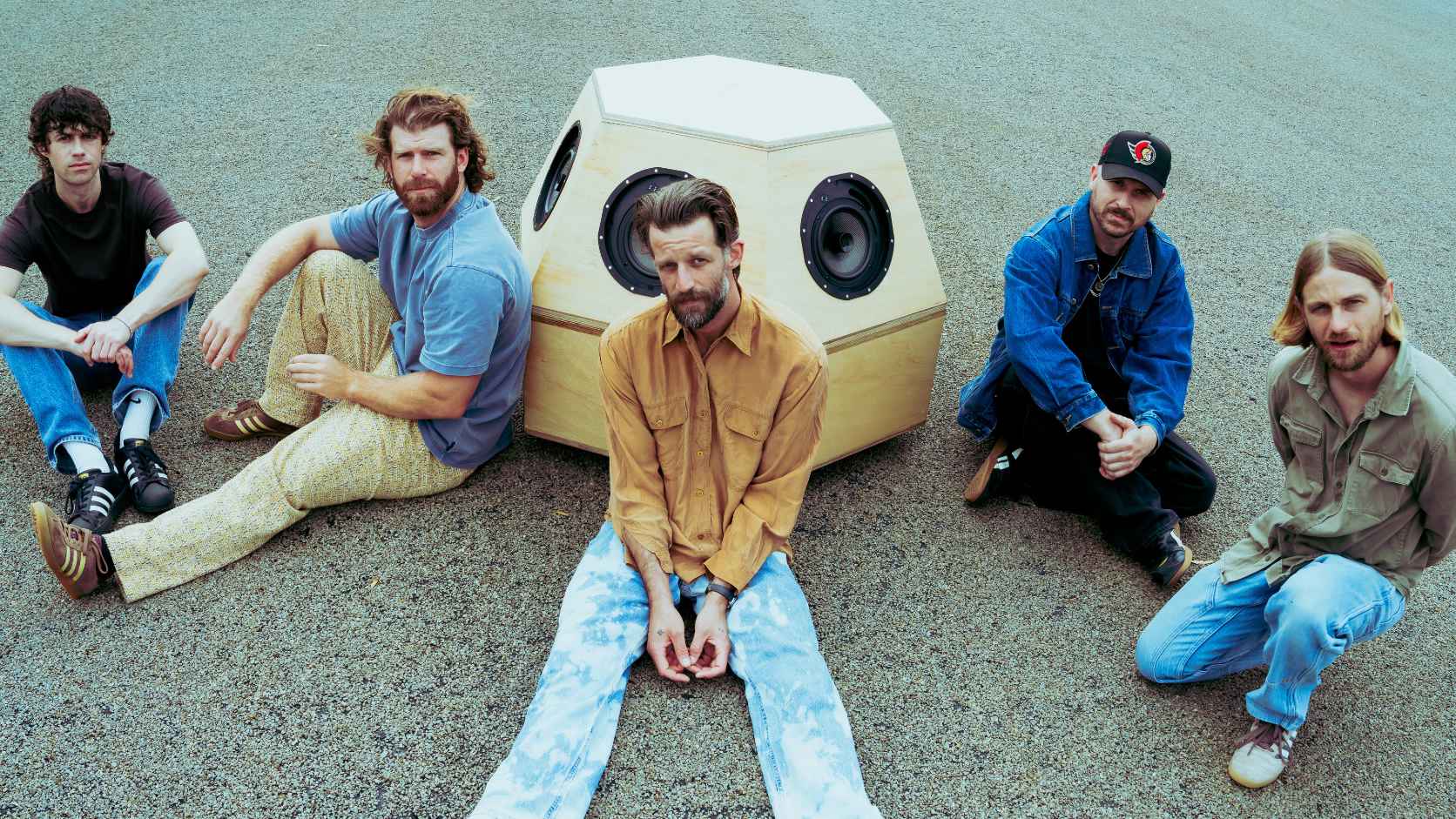
Fifteen years into a career, six albums down and with enough kilometres behind them to have seen just about every side of the music business, The Rubens have found themselves rediscovering something that was there right at the beginning. The simple enjoyment of five mates making music together.
It's an interesting place to arrive after the sort of success The Rubens have enjoyed. From their early days in Menangle, on the outskirts of Sydney, to topping triple j's Hottest 100 with ‘Hoops’, releasing chart-topping albums and touring around the world, they've built a career that most Australian bands would be more than happy with. But somewhere along the way, as recording technology changed and the demands of the industry grew, some of the enjoyment that first brought them together had become a little harder to find.
Their sixth studio album, 'Group Therapy', is in many ways about getting that feeling back. It's a record that returns to guitars, amplifiers, real instruments and the sort of sounds that come from musicians spending time in a room together. But there's a much more personal story running through it, particularly for singer Sam Margin, whose decision to stop drinking has changed not only his approach to music but the way he experiences life on the road.
Catching up with Sam and his brother Elliott for 'Denim Is Good', the conversation begins with a little shared appreciation of vinyl records and old-fashioned music collecting. Elliott seems particularly impressed by the thousands of records lining the walls of my office, and before long we're talking about the days when you could pick up an armful of albums at Vinnies for next to nothing. It's a fitting introduction to a conversation about rediscovering the things that made you fall in love with music in the first place.
The brothers now live in Wollongong, having grown up in Camden, where the band still maintains its recording studio in a converted World War II communications bunker. It's a fairly unusual home for a rock band's creative headquarters, but it's become an important part of how The Rubens work.
For 'Group Therapy', the band wanted to move away from some of the production techniques that had shaped their more recent recordings and spend more time getting the sounds right at the source.
Elliott explains that while they haven't abandoned modern recording methods or started tracking every song entirely live, they made a deliberate decision to be more considered about the instruments and sounds they were capturing.
‘We got used to, because of the norm these days, with most genres, rock and roll included, people replacing sounds, especially with drums’, he says. ‘They'll do a live take of the drums and then beef up the kick with a sub underneath, or they'll do all these bells and whistles after the fact’.
This time, rather than relying on what could be fixed or added later, the band wanted to make better use of the equipment they'd accumulated over the years.
‘We have all the amazing microphones, we've got the studio and the amazing drum kit. Let's just spend time trying to make this kit sound the way we want it to for each song’.
It's an approach that takes Elliott back to recording the band's first couple of albums in the United States, where they found themselves surrounded by instruments and equipment with their own musical histories.
‘That was like being a kid in a candy shop’, he remembers. ‘We had original Hammond organs, we had crazy pianos that Springsteen had recorded on, or Elton John had recorded on’.
Those early experiences were exciting, but over time the band's recording process moved in different directions. Now, with their own collection of guitars, amplifiers and studio equipment, they have the freedom and experience to explore those sounds on their own terms.
‘We've learned enough to back ourselves in the studio producing that way’, Elliott says.
Having their own bunker in Camden has also changed the way they approach recording. In the early days, travelling to America meant expensive studio bookings and the pressure of having to deliver performances within a fixed schedule. There was little room to spend an extra week experimenting with a guitar tone or trying to get a particular drum sound.
These days, if something isn't working, they can simply come back tomorrow.
‘We don't have time constraints’, Elliott explains. ‘If things aren't right, we can come back the next day, or in a week, and figure it out. We can come in and do piecemeal parts at a time, and it's way more enjoyable for everybody’.
The bunker itself has become another instrument in the recording process, with its cavernous spaces providing natural reverberation and some interesting possibilities for drums and guitars.
‘You can get some wild drum sounds and some nice reverbs for the guitars as well’, he says.
There's a certain irony in a band finding greater creative freedom inside an old military bunker, but for The Rubens, the space has become somewhere they can work without the financial pressures and distractions that once accompanied recording overseas.
It has also given them room to deal with the more difficult moments that life occasionally throws their way.
During the making of 'Group Therapy', Sam reached a point where he needed to step away from recording and address his relationship with alcohol. He's spoken openly about the experience and describes the new record as his first sober album.
For someone who has spent most of his adult life in a touring rock band, changing a routine that had become so familiar wasn't necessarily easy.
‘I think it was daunting initially because all I've known is being in a band and beers aplenty’, Sam explains. ‘I think just changing anything in a routine is scary’.
Drinking had become such an accepted part of the touring lifestyle that removing it initially felt like a major disruption. But once he'd made the change, he discovered that the things he'd been worried about losing were replaced by experiences he enjoyed far more.
‘I think I'm quite an obsessive person’, he says. ‘I replaced bad habits with good habits, and the recording process was more enjoyable because of it’.
One of the biggest differences was his ability to slow down and enjoy the work rather than becoming frustrated when things weren't moving quickly enough.
‘I was way more patient. If things were taking time, or if there were issues in the studio, I was happy just to sit with them and work it out’.
That change has carried through to touring as well. After years of early flights, late nights and the inevitable consequences of drinking on the road, Sam has found a new appreciation for the everyday parts of being a musician.
‘I'm pushing 40, and being hungover on the road, it sucks’, he laughs. ‘I've just got way more energy, and I just enjoy the day. I enjoy the travel, I enjoy soundcheck, I enjoy the show way more. And I wake up feeling good’.
For Elliott, watching his brother go through that period was understandably difficult. When Sam stepped away from the recording sessions, the immediate concern wasn't about finishing the album or meeting a deadline. It was about making sure he was okay.
‘It was scary, and I don't think any of us thought it was scary because we were meant to be there recording the album’, Elliott says. ‘It was just scary because we were scared for Sam, and it was obvious that he was going through some stuff’.
But after 15 years together, the band had developed the sort of understanding that comes from knowing each other well beyond the rehearsal room.
‘We realised he's going to be okay, he's going to sort this out’, Elliott says. ‘We've got this time in the studio, Sam's going to take a break, and when he gets back, we're going to be here, ready to keep on working’.
He admits that the same situation might have been more difficult to navigate earlier in their career, when the band was younger and less experienced.
‘I think 15 years in, we are a solid unit and we all have our roles to play. If someone needs to step away for some reason, we all know that we can hold down the fort until they're back’.
It's a reflection of how The Rubens have grown together, not just as musicians but as brothers, friends and people with lives beyond the band. Families, children and other commitments mean that the five members aren't always available to be in the studio at the same time, and they've learned that making a record doesn't necessarily require everyone to be present for every session.
That understanding became particularly important during the making of 'Group Therapy', and it also helped give the album its name.
What began as a fairly simple idea about the band being a form of therapy for its members gradually developed into something with a much broader meaning.
‘We just love playing music together, we love writing music and recording music together and travelling together’, Elliott says. ‘And then slowly realising that not only do we love it, but it's also just good for us. It is therapeutic in a way, and we're lucky that that is our job’.
Interestingly, 'Group Therapy' was the first time the band had settled on an album title while they were still recording. As the sessions continued, the meaning of those two words began to grow.
‘Music is that for everyone, every music lover’, Elliott reflects. ‘They find some kind of therapy in the music they listen to, or if they go to see artists live, they get something from that as well, being around people and listening to the music they love, and that kind of community’.
It's a sentiment that will make sense to anyone who has spent time around live music. There's something about standing in a room full of strangers, all connected by the same song, that can be difficult to explain to someone who hasn't experienced it.
For Sam, rediscovering that connection began with enjoying the process of making music again.
‘It's about the music, it's about the process, that's the fun part. All the rest of it is secondary’, he says.
Having producer Konstantin Kersting physically in the bunker this time also helped bring some fresh energy to the sessions. Kersting had previously worked with the band remotely, but being together in the studio introduced a different dynamic.
After spending so many years working alongside the same people, Sam says having someone new in the room helped everyone see their familiar surroundings and routines a little differently.
‘We know each other so well, we spend so much time together, that having that extra person in the room was really good’, he explains.
Kersting's enthusiasm and creativity helped make the sessions enjoyable, while the band also took pleasure in showing him the space they'd built in Camden.
That sense of rediscovery runs through the album's music, but 'Group Therapy' also finds The Rubens looking back at some of the experiences that shaped their career.
One of those songs is ‘Love Me America’, which revisits the band's earliest trips to the United States, when they were young, inexperienced and suddenly attracting attention from major players in the international music industry.
It was an exciting time, filled with opportunities, promises and the sort of experiences that can make a young band believe the world is opening up in front of them.
Looking back now, Elliott sees those trips as an important education in the realities of the music business.
‘That trip probably taught us to trust our own instincts and try not to listen to all the bullshit’, he says.
He isn't suggesting the people they encountered were necessarily dishonest or malicious, but the experience taught them to recognise the difference between the interests of a band and those of the business surrounding it.
‘There's a lot of talk, a lot of promises, and then promises not delivered’, he says. ‘It's not just America either. I've seen the same kind of thing in the Australian music industry as well’.
For a young band being courted by record labels, the dinners, attention and financial promises can be difficult to separate from the reasons they started making music.
‘This is a business like any other business. There's a revolving door of executives, and this isn't why you're doing it’, Elliott explains. ‘They might try and show you all these shiny things and offer you dollar figures on a piece of paper, take you out for dinner, but really, they're in this for the business’.
Despite those lessons, Elliott is quick to point out that America remains a place the band loves returning to. The song isn't simply a criticism of the industry, but a reflection on the excitement and confusion that often accompanies a young band's first taste of international attention.
It's also a reminder of how much The Rubens have experienced since those early days in Menangle.
The band first emerged in 2011 after uploading ‘Lay It Down’ to triple j Unearthed, quickly building momentum through radio support, festival appearances and their self-titled debut album. Their second album, 'Hoops', delivered the song that would become one of their defining moments, topping triple j's Hottest 100 and introducing the band to an even broader audience.
Since then, they've continued releasing records, touring internationally and building a catalogue that has become part of the soundtrack for a generation of Australian music fans.
Yet for all the success they've enjoyed, it's the unpredictability of live performance that still excites them.
Elliott admits that even after 15 years, putting a tour on sale brings its own nervous energy. There's always that uncertainty about whether people will buy tickets, how a particular room will respond and what sort of night awaits when the band walks on stage.
‘There's the doubt in your mind, are people going to show up?’ he says. ‘Then stepping on stage and trying to gauge the crowd from that point on, and ride the wave’.
But once the music starts and the audience responds, something else takes over.
‘To actually see people when we're playing music that means a lot to them, see them respond to it, is the therapeutic part’, Elliott explains. ‘We get to give something to them, but that also is giving back to us’.
It's a relationship that sits at the heart of what The Rubens have come to understand about their music.
‘We're not just playing these songs in a void, or writing these songs in a void. It is for an audience who cares about the things that we obsess over, which is very special’.
After six albums and a career that has taken them around the world, I ask what success looks like to them these days. It's a question that might once have produced an answer about chart positions, international tours or the next big opportunity, but Elliott's response is refreshingly straightforward.
‘I think it just looks like being professional musicians, in that we make a living from making music. That's as simple as that’.
Now a father himself, he sees success less in terms of money or industry recognition and more in the ability to spend his working life doing something he genuinely enjoys.
‘I've got kids now, and success for me, and what I would tell them, is just getting paid to do something that you really like. Enjoying what you do for a living. I think that's success’.
It's a perspective that perhaps comes more easily after 15 years of experiencing the highs and lows of the industry. The excitement of those early American trips hasn't disappeared, but the things that matter most have become a little clearer.
For The Rubens, 'Group Therapy' isn't simply another album in a successful career. It's a record made by five musicians who have learned to trust each other, give one another space when it's needed and appreciate the opportunity to keep making music together.
The guitars are back at the centre of the sound, the bunker has become their creative home, and Sam has found a renewed enjoyment in the everyday experiences of being a musician. Perhaps most importantly, the band seems comfortable with where it is and what it wants from the future.
Before we finish, I ask the question that has become something of a tradition in my 'Denim Is Good' interviews. It's a simple one, but the answers often reveal a little of the personality behind the music.
Denim is good because…
Elliott doesn't need long to think about it.
‘You can wear it all weekend and it's still clean’.
After everything we've talked about, from sobriety and songwriting to the realities of the music business, it's a wonderfully uncomplicated way to finish.
And perhaps that's the point. Sometimes the best things in life are the ones that don't need to be overthought. A good song, a few mates, a room full of people who want to hear you play, and the chance to get up the next morning and do it all again.
The Rubens – Group Therapy Tour
Fri 20 Nov – Hobart, TAS – Odeon Theatre
Sat 21 Nov – Forth, TAS – Forth Pub
Thu 3 Dec – Fremantle, WA – Freo Social
Fri 4 Dec – Margaret River, WA – The River
Sat 12 Dec – Wagga Wagga, NSW – Romano's
Fri 22 Jan — Shoal Bay, NSW — Shoal Bay Country Club
Sat 23 Jan — Erina, NSW — Woodport Hotel
Sun 24 Jan — Lake Macquarie, NSW — Toronto Hotel
Mon 25 Jan — Mona Vale, NSW — Mona Vale Hotel
Thu 28 Jan — Pacific Palms, NSW — The Recky
Fri 29 Jan — Coffs Harbour, NSW — Hoey Moey
Sat 30 Jan — Yamba, NSW — Yamba Bowling Club
Sun 31 Jan — Brunswick Heads, NSW — Hotel Brunswick
Fri 12 Feb — Wombarra, NSW — Wombarra Bowling & Rec
Sat 13 Feb — Kiama, NSW — The Pavilion
Listen Now
Denim Sounds Good
Listen to the latest tracks, new releases and old favourites.